


Football Legacy Manager 24
3.534.00 Reviews
App Specs
- Version
- 24.1.16
- Updated On
- License
- Free
- Downloads
- 10,000+
- Developer
- Hockey Legacy Manager
- Categories
- Sports
- Platform
- Android
Screenshots
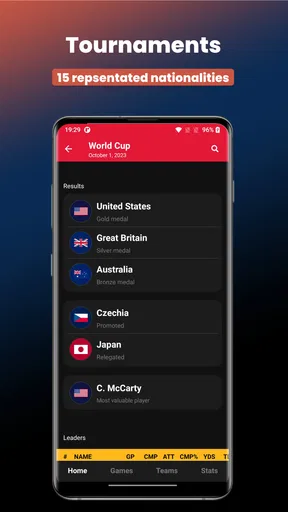
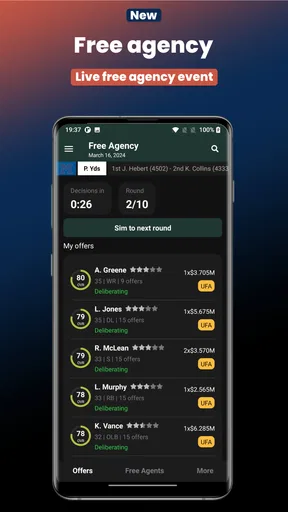
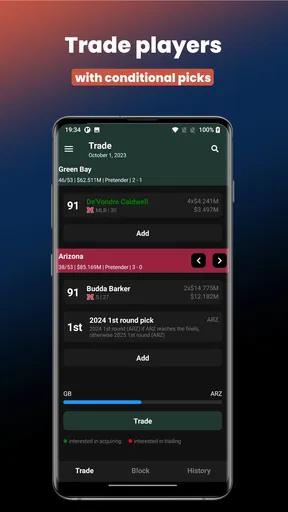
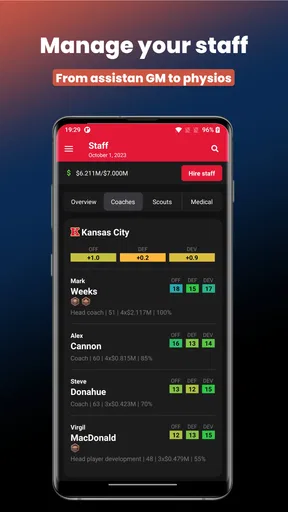
 Analysis by AppCompare
Football Legacy Manager 24 is the kind of sports game I open when I want to think like a team executive rather than control every play on the field. Developed by Hockey Legacy Manager, it puts the focus on building a long-term American football organization, making decisions, and watching a plan develop over time. That sounds straightforward, but the appeal is more patient than immediate: this is for players who enjoy shaping a team’s future, not just chasing a quick match.
I approached it as a management game rather than a traditional football title, and that distinction matters. If you are expecting an action-heavy experience with direct controls, this will probably feel too indirect. If you like weighing options, accepting imperfect outcomes, and gradually creating a team identity, its slower rhythm makes more sense. The game is free to download, with optional in-app purchases ranging from $4.49 to $10.99 per item, so it is easy to try before deciding whether it deserves a regular place on your phone.
Getting past the first points of friction
The first challenge is mental rather than technical. A manager game can feel quiet compared with a conventional sports game because the reward comes from decisions accumulating over time. I found it useful to begin with one clear objective instead of trying to optimize everything immediately. For example, I might concentrate on improving the team’s short-term competitiveness, or I might accept a difficult season while building toward a stronger future. Having that priority makes the early choices easier to judge.
Players who get stuck often treat every decision as equally urgent. That creates unnecessary pressure and makes the game feel more complicated than it needs to be. I recommend pausing before committing to a change and asking what problem it is meant to solve. Is the team struggling now, or is the decision about future stability? That simple distinction helps separate emergency moves from long-range planning.
The game’s store summary presents it as a chance to build a lasting legacy as the general manager of an American football team. In practice, I read “legacy” as a style of play: you are not only reacting to the latest result, but trying to make choices that remain sensible several steps later. That makes the experience especially suitable for people who enjoy planning, comparing trade-offs, and seeing whether their original idea survives contact with the season.
What to check before blaming the game
Because this is a mobile management game, a smooth start depends on a few ordinary checks. I would first confirm that the device is running at least Android 5.0, which is the listed minimum operating system. On an older phone, the issue may be general performance or compatibility rather than a problem with the game itself. Closing other demanding apps before launching is also a sensible first step if screens feel slow or the device is already under strain.
I would also make sure there is enough free storage for the installation and any routine device processes. A nearly full phone can behave unpredictably, even when an app itself is functioning correctly. If the game opens but a screen takes time to appear, I would wait briefly before repeatedly tapping. Rapid taps can make it difficult to tell whether the game has ignored an input or is still processing it.
Worth Reading Before You Choose

EA SPORTS FC Mobile 26 Is a Bigger Football Game, but It Takes Time

Flipboard Shows What News Apps Must Do Beyond the Feed

Switching to Android Auto Means Rethinking Your Driving Routine

Google Calendar Makes a Crowded Week Easier to Manage

Ludo King Makes the Most of the Minutes Between Plans

Baby Panda World Brings Quick Play to Modern Phones, but Its Game Library Feels Busy
Another useful setup habit is to play the first session in a stable environment rather than while moving between weak connections. Any game that loads information or handles optional purchases can be more frustrating when the connection changes repeatedly. If something looks incomplete, I would close the game normally, reopen it, and check whether the same screen still behaves incorrectly before making any other change.
These checks are not glamorous, but they prevent a common mistake: changing several things at once and then not knowing what fixed the problem. I prefer a simple sequence. Restart the app, check the connection, confirm available storage, and then try again. If the issue remains, restarting the phone is reasonable. Only after those steps would I consider reinstalling, and I would be cautious about doing that if I was unsure how the current progress is retained.
Recovering a disrupted management routine
One of the most useful ways to play is to keep a small mental record of the decisions behind the current team direction. I do not mean maintaining a complicated spreadsheet. I mean remembering the main objective, the compromises already accepted, and the next decision that matters. This becomes valuable if I leave the game for several days or return after an interrupted session. Instead of changing course impulsively, I can continue from the same plan.
If a session ends unexpectedly, I would avoid immediately undoing the last few decisions. First, I would reopen the game and inspect the current state carefully. A result that looks disappointing may still fit the broader plan, while an apparently positive result may hide a decision that creates trouble later. Reconstructing what happened before reacting is especially important in a management game, where not every consequence is visible at once.
A practical recovery method is to change only one variable at a time. If the team is underperforming, do not simultaneously alter every part of the strategy, abandon the long-term plan, and spend money on optional content. Make one considered adjustment, observe the next meaningful outcome, and then decide whether another change is justified. This approach makes the game more understandable and reduces the feeling that success depends on random guessing.
I also found that a bad run can be informative. It may reveal that an aggressive plan is too fragile, that a short-term fix has created a longer-term problem, or that I was judging the team only by its latest result. Rather than treating every setback as a failure of the app, I use it to test the assumptions behind my management style. That is where the game has more depth than its compact mobile format initially suggests.
A realistic everyday way to play
For a normal weekday, I would use Football Legacy Manager 24 in short, deliberate sessions. I might open it during a break, review the current situation, make one or two decisions, and close it instead of trying to complete a large block of progress. This works well because the game’s central appeal is reflection, not constant finger movement. A short session can still feel worthwhile if it answers a specific question about the team.
On a weekend, I might spend longer reviewing the direction of the organization and considering whether the current approach is still working. The important point is not to confuse more time with better management. Extended sessions can encourage unnecessary tinkering, especially when the last decision has not had enough time to show its effect. I get more from the game when I let a plan breathe before judging it.
This routine also helps with the free-to-play structure. Since optional purchases are available, I would decide in advance whether I am comfortable spending anything and avoid making a purchase simply because a difficult moment feels frustrating. The game is more satisfying when I can tell whether progress comes from my decisions rather than from reacting to pressure. For someone who wants a completely purchase-free experience, that choice should be made clearly at the beginning.
When the problem is probably outside the app
Not every inconvenience points to a software fault. If the whole phone is sluggish, other apps are also failing, or the device is overheating, the broader device environment deserves attention first. Freeing storage, closing background apps, and restarting the phone are sensible general measures. If only this game is affected, then restarting it and checking whether the problem is repeatable gives a clearer picture.
Connection problems can also be misleading. A screen that loads slowly may be caused by an unstable network rather than by the game’s management systems. I would test the app again on a dependable connection before concluding that a feature is broken. Likewise, if a purchase does not appear immediately, I would avoid repeating the transaction in a hurry. I would first allow time for the original request to finish and check the relevant device account or purchase history.
Reinstallation is the step I would treat most carefully. It can clear local problems, but it may also remove locally stored progress if a game does not restore it automatically. Since the safe recovery path depends on how progress is handled on the particular device, I would use reinstalling only after simpler steps and only when I am comfortable with the possible consequences. This is a general precaution, not a reason to avoid the game.
There is also a difference between a design limitation and a technical error. A management game may not provide the immediate feedback that action-focused sports players expect. A result can feel underexplained, or a decision may not produce an obvious change right away. That can be frustrating, but it is not necessarily malfunctioning. Before reporting a problem, I would ask whether the behavior is consistently preventing progress or simply asking me to think in a less immediate way.
How it compares with ordinary sports alternatives
Compared with arcade football games, this title is much less about reflexes and much more about responsibility. You are not choosing it for dramatic on-field control or instant visual excitement. The trade-off is that it can remain interesting even when you only have a few minutes, because the decision itself is the activity. I would choose a conventional football game when I want direct action and this one when I want to build a plan.
It also differs from broad, highly detailed sports-management simulations. Those alternatives may offer a larger sense of scale, more layers of information, or a presentation aimed at players who want to analyze every possible detail. Football Legacy Manager 24 feels better suited to someone who wants the management idea in a mobile-friendly form without turning every session into a research project. The compromise is that players seeking maximum realism or exhaustive control may find it too limited.
Its average rating is 3.5 from around 128 ratings, which suggests a mixed but meaningful response rather than universal agreement. I would not use that number as a substitute for understanding the game’s style. The rating is more useful as a reminder that this is a specialized experience: people who enjoy management games may value its focus, while people expecting a standard football game may judge it very differently.
The audience size is modest, with over 10 thousand installs, and that fits my impression of the product. It is not trying to be the obvious choice for every sports fan. It is a focused game for a particular kind of player. The developer name may also cause a moment of hesitation because Hockey Legacy Manager sounds connected to hockey, but the game itself is built around American football management, so the relevant question is whether you enjoy the management format rather than the developer’s name.
Small decisions that improve the experience
My first practical tip is to define success in layers. A team can be successful because it wins immediately, because it becomes more stable, or because it moves toward a clear future. If I judge only the first layer, I may discard a sensible plan too quickly. Writing down one short-term goal and one long-term goal, even mentally, makes later choices more consistent.
My second tip is to resist making changes after every disappointing outcome. Management games become noisy when the player reacts to each result as if it were a complete verdict. I prefer to look for a pattern before changing direction. This is especially helpful for new players, because it turns the game into a learning process rather than a sequence of emotional corrections.
My third tip is to separate curiosity from necessity when considering in-app purchases. Optional content can be tempting when progress slows, but the best time to decide is before frustration takes over. If I am enjoying the planning itself, I can continue treating the game as a free experience. If I later decide that a purchase adds enough value, it should be a deliberate choice rather than an emergency response.
My fourth tip is to use short sessions for diagnosis and longer sessions for planning. A quick visit is enough to check the team’s current direction, while a longer session is better reserved for thinking through several connected choices. Mixing those purposes can make the game feel either rushed or repetitive. Giving each session a job keeps the experience focused.
Who should install it, and who should skip it
I would recommend it to football fans who enjoy the general-manager role, players who like long-term decision-making, and anyone looking for a sports game that does not depend on fast reactions. It is also a good fit for people who enjoy experimenting with different approaches and learning from outcomes that are not always immediate. The free entry point makes it practical to test that style without committing money at the start.
I would skip it if my main reason for downloading a football game is to control players directly, enjoy constant action, or see instant rewards from every tap. I would also be cautious if I dislike making choices without immediate certainty. The game asks for patience, and its management focus will not become an action game simply because the subject is American football.
Players who want a deep, professional-grade simulation may prefer a more expansive alternative with a heavier emphasis on detailed analysis. On the other hand, someone who finds those games overwhelming may appreciate this more focused approach. The right choice depends less on how much football a person watches and more on whether they enjoy the work of running a team.
My practical verdict
Football Legacy Manager 24 is a focused sports management game with a clear identity. I like it most when I treat it as a thoughtful mobile planning experience rather than a substitute for an on-field football title. Its strengths are the sense of direction, the ability to make a team-building plan your own, and the flexibility to play in short sessions. Its weaknesses are the slower pace, the possibility of unclear-feeling consequences, and the fact that optional purchases require personal restraint.
The game was released on September 7, 2023, and its current version is 24.1.16. It is rated for Everyone, which makes it broadly approachable, while the management style still gives it enough decision-making weight for adults who enjoy sports strategy. I would begin with the free version, use the setup checks above if the first session feels rough, and avoid judging the whole experience from one result or one interrupted screen.
My recommendation is simple: install it if the idea of building a football legacy sounds more appealing than controlling every play. Give yourself time to understand the rhythm, keep your early goals modest, and make changes methodically. If you want immediate action, choose a traditional football game instead. If you want to think, plan, recover from mistakes, and see whether your choices create a stronger organization, Football Legacy Manager 24 is worth trying.
After spending time with it, I see it as a niche but worthwhile option rather than an all-purpose sports recommendation. Its rating of 3.5 and its audience of over 10 thousand installs reflect that narrower appeal. For the right player, that focus is exactly the reason to keep it installed; for everyone else, it is a clear signal to look for a faster or more detailed alternative.
Pros
- Deep squad management with transfers
- contracts
- tactics
- and training.
- Large database of clubs and players offers plenty of long-term career variety.
- Matches run quickly
- making it easy to progress through multiple seasons.
- Detailed statistics help you evaluate player form and team performance.
- Works well for fans who prefer strategy and planning over direct match control.
Cons
- The interface can feel dense and take time to learn for new players.
- Limited visual match presentation may disappoint fans of action-focused football games.
- Managing finances and contracts can become repetitive during longer careers.
- Some features and content may require in-app purchases or premium access.
- Older devices may experience slower loading with larger leagues and databases.
FAQs for Football Legacy Manager 24
What is Football Legacy Manager 24?
Football Legacy Manager 24 is a football management simulation game in which you take control of a club and handle the decisions that shape its future. You can work with squads, transfers, tactics, training, finances, staff, and match preparation. Rather than controlling players directly during matches, you focus on building a competitive team and managing the club over multiple seasons.
Can I play Football Legacy Manager 24 offline?
The game is designed primarily as a single-player management experience, so many of its core features can be enjoyed without competing against other players in real time. However, some versions or functions may require an internet connection for downloading data, displaying advertisements, validating purchases, or receiving updates. It is best to check the store listing and test the game after installation if offline access is important to you.
What can I manage in Football Legacy Manager 24?
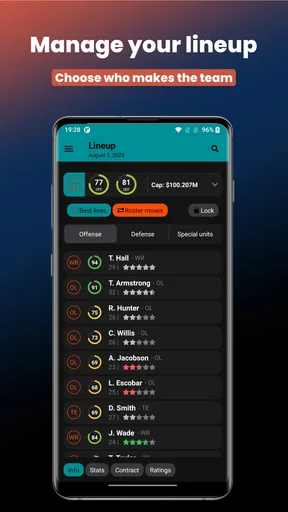
The main appeal is the range of responsibilities placed in your hands. You can usually influence transfers, contracts, lineups, formations, tactics, training, player development, scouting, and club finances. Your choices affect morale, performance, results, and long-term progress. The game is therefore better suited to players who enjoy planning and decision-making than those looking for an arcade-style football match.
Is Football Legacy Manager 24 suitable for beginners?
Yes, beginners can enjoy Football Legacy Manager 24, although the number of menus and management decisions may feel overwhelming during the first few sessions. The best approach is to begin with a club that has a stable squad and realistic expectations, then learn one area at a time. New players should avoid making too many transfers immediately and pay attention to finances, player roles, and team balance.
Does Football Legacy Manager 24 include real clubs, players, and leagues?
The availability of real-world clubs, players, competitions, names, and logos depends on the game’s licensing arrangements and the specific version available on your device. Some football management games use official data, while others include fictional or modified content. Before downloading, review the current Google Play or App Store description, screenshots, and update notes if authentic teams and player databases are essential to your experience.


